Showing posts with label Black Artists. Show all posts

Saturday, May 19, 2018

THE REST OF THE WORLD DISCOVERS DANAI GURIRA


PLAYWRIGHT 

DANAI GURIRA MAKES BLACK HISTORY ON BROADWAY WITH "ECLIPSED"

http://thankherforsurviving.blogspot.com/2016/03/danai-gurira-makes-history-on-broadway.html


STAGE ACTRESS

DANAI GURIRA, A PLAYWRIGHT BUILDING ONE BLACK CAREER AT A TIME

http://thankherforsurviving.blogspot.com/2016/11/danai-gurira-playwright-building-one.html


TELEVISION ACTRESS
WILL THE WALKING DEAD LOSE MICHONNE AFTER BLACK PANTHER?


https://www.forbes.com/sites/insertcoin/2018/02/24/the-walking-dead-losing-michonne-after-black-panther-its-certainly-possible/#167a9f557858


MOVIE ACTRESS

BLACK PANTHER: THE DARK-SKINNED FEMINIST ANATOMY OF A BILLION DOLLAR BLACK SUCCESS

http://blackchickrocked.blogspot.com/2018/03/black-panther-dark-skinned-feminist.html


BLACK FEMINIST

DANAI GURIRA WON'T STOP UNTIL BLACK WOMEN OF COLOR CAN TELL THEIR STORIES


http://thankherforsurviving.blogspot.com/2016/09/danai-guirira-wont-stop-until-women-of.html


She's a black female image creator and black artist in the truest sense of the word. She's been on fire for a long time. BLACK PANTHER has simply raised her profile enough to give her the attention and freedom she deserves.

I'm always on the look out for what she does next. And you should be too.


Friday, September 1, 2017

THE CREATION OF GOD by HARMONIA ROSALES


Feeling Rebloggy


An artist is replacing the white men in classical paintings with black women, in order to address the lack of representation women of colour face.
Harmonia Rosales, 33, lives and works in Chicago.


And her latest work, an incredible modern-day reworking of Michelangelo’s The Creation of Adam, is going viral.


Read more: http://metro.co.uk/2017/05/24/white-men-are-being-replaced-in-classical-paintings-with-black-women-6658354/#ixzz4rPSWcLe8


Harmonia added: "White figures are a staple in classic art featured in major museums. They are the 'masters' of the masterpieces. Why should that continue?"

The artist went on to explain that representation matters in all mediums, and that includes art. "Replacing the white male figures — the most represented — with people I believe have been the least represented can begin to recondition our minds to accept new concepts of human value," she reasoned. "If I can touch even a small group of people and empower them through the power of art, then I've succeeded in helping to change the way we see the world." 

...As for Harmonia's own inspiration, she explained to Buzzfeed that her daughter is a huge source of passion when it comes to her artwork. "I want my daughter to grow up proud of her curls and coils, her brown skin, and for her to identify as a woman of color, a woman of value," she said....

Read More:


Friday, August 25, 2017

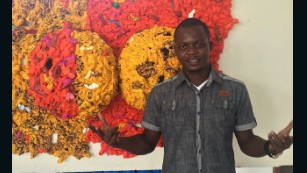
THE HYPER-REALISTIC PAINTINGS OF NIGERIAN ARTIST ORESEGUN OLUMIDE


Feeling Rebloggy 
From CNN
"Water is a recurring theme in his art because according to a popular adage in his native Yoruba language, "water has no enemy," Olumide told CNN.

The use of water gives a translucent effect and, he says, is "why it's difficult for many people to do."
Olumide pushes himself to create art that his community hasn't seen before and that is challenging for him.
He became interested in art at the age of four and started professionally creating art in 2005, Olumide said.
The 35-year-old majored in Fine Art at the Yaba College of Technology , Lagos, graduating with a distinction. "

Read More:

Saturday, August 19, 2017

DICK GREGORY DIES AT 84

HE WAS AN AFRICAN AMERICAN ICON. 


Though I hope he missed Charlottesville altogether. If he did see Charlottesville I hope he watched a lot more white folks show up for the fight. More importantly,  I hope he watched Trump set his own butt on fire this week. I've been laughing at Trump for days.

I hope Mr. Gregory got a chance to do that too if he had to know about Charlottesville at all.

My grandmothers died a couple of years ago. I was glad they got to see Barack Obama become president. But I'm so fearful the old folks in my family will die with Orange Twitterb*tch in office. I don't want them to die thinking we're going to lose ground all the way back to the 1950s.

I know they won't hang onto it when they pass. But I don't want them to be troubled by the news or the troubles of younger relatives who are worried now.


Mostly, I hope Dick Gregory's last days were peaceful and he didn't see Charlottesville at all. I hope he went peacefully. It seems like he deserved that. He lived a brave life.


From MSN

Mr. Gregory was a breakthrough performer in his appeal to whites — a crossover star, in contrast to veteran black comedians like Redd Foxx, Moms Mabley and Slappy White, whose earthy, pungent humor was mainly confined to black clubs on the so-called chitlin circuit.
Though he clearly seethed over the repression of blacks, he resorted to neither scoldings nor lectures when playing big-time rooms like the Hungry I in San Francisco or the Village Gate in New York. Rather, he won audiences over with wry observations about the country’s racial chasm.
He would plant himself on a stool, the picture of insouciance in a three-button suit and dark tie, dragging slowly on a cigarette, which he used as a punctuation mark. From that perch he would bid America to look in the mirror, and to laugh at itself.
“Segregation is not all bad,” he would say. “Have you ever heard of a collision where the people in the back of the bus got hurt?” Or: “You know the definition of a Southern moderate? That’s a cat that’ll lynch you from a low tree.” Or: “I heard we’ve got lots of black astronauts. Saving them for the first spaceflight to the sun.”
Read More: http://www.msn.com/en-us/news/us/dick-gregory-84-dies-found-humor-in-the-civil-rights-struggle/ar-AAqnhgc?li=BBnbcA1 


As he got older, he spoke, did interviews. He was an awesome speaker

Monday, May 1, 2017

Feeling My Way Through Claudia Rankine's CITIZEN: AN AMERICAN LYRIC

Simone Missick from CITIZEN: AN AMERICAN LYRIC and LUKE CAGE


continued from "Living Through CITIZEN: AN AMERICAN LYRIC"


There was an entire section of the play about Serena Williams that floored me.

I'd heard the racist and white supremacist commentary about her, especially at the beginning of her career. But I don't watch sports, so I didn't see the details of what happened to her. When she wins I jump up and down, fist in the air like I'm the one doing battle and winning on the court. Her wins feel personal to me. But I feel like a bad non-friend now.  I had no idea just how aggressively white tennis tried to eject her black body from the sport. 
I didn't know about things like white referees having to be removed from judging her permanently after making 5 bad calls against her in a row. And somehow I missed Serena's winning 12 sets in a row in 2012, then having to defend her little victory dance being called a "Crip Walk" that endorses gangster activity.   

Learning what Serena went through made my being unable to find lab partners in class after class after class at my predominantly white school seem like so much nothing.    
This elephant hide insensitivity to unintentional racism and intentional but unconsciousness racism was captured masterfully in this play. But the play seemed more about us, about black people, about how these interactions with peaceful-looking, peace-wanting(?) white people get stored inside us.

Like actor Jeffrey Tambor, who just happened to be there the same night I was, felt very strongly that this play needs to move from Los Angeles Theater to film so more people can see it sooner rather than later. There is a push to move it Broadway. But I hope Tambor's plan is taken seriously so a broader audience can see it. In this age of Trump, we need more American art to reveal people to themselves. And this play was that powerful. It was so powerful that I felt a hollow pain inside. But it disturbed white others so much that they could barely stand it.

And some didn't stand it. One white man and his wife got up and left less than 15 minutes into the play.

During the discussion that took place after the play was over, I found out I was too engrossed to notice that more than a few white people snuck out in the middle of the play while others remained and fidgeted (much like they did during the not-comparable-at-all movie GET OUT).
However, maybe one-third of the mostly white audience stayed for the discussion of the play and race afterward.
One white man discussed how he was shocked at his parents negative reaction to a "professional black woman" he was dating when he was young -- and how that shock and hurt at his supposedly "non-racist" parents resulted in him deciding he would always raise his children in neighborhoods with a mixture of races and ethnicities in it.

An ancient white-looking woman haltingly told the audience of how she had a thriving shop until her neighbors found out she was Iranian. That was her entry into feeling what ethnoracism is like for black people.


The play wasn't perfect because the book likely wasn't perfect. Other than the wide section on Serena Williams (the female director's choice)I felt like I was missing black women a bit.

When recounting the unarmed black people murdered by police, only Sandra Bland's name was called out -- as I recall. I'm assuming the language choice was due to their quoting directly from the book. But black women were added back by putting up a mixture of black men and black women killed by police on the screen behind the actors.

But I wasn't too put out by this. You had to dig to find the real story of what happened to black women like Miriam Carey. And what I found within myself after watching this play was invaluable. There are so many things that I just pretend are okay day to day. And not just among white people either. I realize I do some of the same things in regards to gender and within my own family of origin's dysfunction. It's no wonder, sometimes my vacations involve going off to a place out in the sticks where I don't have to see, hear, or talk to anybody for a week. It's exhausting to absorb day-to-day trauma that everybody absorbs then absorb racism and dysfunctional family stuff too.

Speaking up because it's the truth and not because it will change things is a value I have a hard time holding onto.

The truth may not set YOU free but it may set somebody else free. At work, if you have to leave a job because of a racist, put it on record. If four people leave and put it on record, eventually somebody has to pay attention. It took years and years and he got 25 million dollar severance package but a hell of his own making is waiting for Bill O'Reilly because women went on record before they left. And there are other lesser O'Reilly-s in lesser jobs around the country who will be fired because we as black people or we as women or we as black women spoke up before we left our jobs.

At home, if you have to leave a family situation because of a racist or sexist or an abuser, then put it on record by talking about it when the moments right. There are a lot of people repeating the dysfunction they found in their own homes and laying it on their children.

What I found in CITIZEN: AN AMERICAN LYRIC was how much racism, sexism, and everything else I am holding inside my body. The scars will remain. But not speaking holds onto pain that morphs into other things like bitterness, weight gain, weight loss, high blood pressure, workaholism, respectability politics, and just plain stupidity

What white folks will find in the play CITIZEN: AN AMERICAN LYRIC are behaviors and beliefs they view as harmless.

At the end of the play, a black woman told a story of her nephew quitting his job because of a racist and how she felt he had to learn how to take it. Thankfully, one of the black actors and a few people in the audience said, "No, sometimes you have to leave." I didn't get to share my opinion that people should file a complaint before exiting if possible, should leave a paper trail that might lose a middle-class lesser-Reilly his job 10 years after you're gone. And I felt a bit silenced right after I felt empowered to speak.

Moments later, on my way to the car a young, very stoned young white boy said to me, "Oh my Gawd. You are beautiful!" when I was feeling old and overwhelmed and anything but beautiful. Seconds later, a white couple turned around and came back to me, offered to walk me to my car.

Felt like a God moment that I needed very badly because as my beauty fades and attention that used to scare me to death comes less frequently, I realized I feel my female worth disappearing even though I'm a feminist. More important than that was the fact that the white couple made me think about how I feel more and more like intellectual understanding of racism means very, very little. It is feeling that matters.

Coming out of the play themselves, the white couple probably wanted to do something nice for a black person or simply felt their humanity more after such a play left us all feeling so vulnerable....or maybe they do that sort of thing all the time. But it was important to me to re-feel that changing how people feel is the way forward for white America.

And it is white America that needs to move forward.

It is White America that has the disease of choosing only to feel for themselves, that has the disease of hiding from the dis- ease they feel whenever they remember their shared history with us and do everything in their power to avoid it's impact on the present.

Claudia Rankine's CITIZEN: AN AMERICAN LYRIC making us feel a little too much is part of the remedy for what ails us all. I'm going to get the book. I hope I have enough imagination to fill the words up the way the actors, including Simone Missick of LUKE CAGE, did on that barren little Kirk Douglas Theater stage in Culver City last weekend.

Sunday, April 30, 2017

Living Through CITIZEN: AN AMERICAN LYRIC


Add caption
I so seldom get to see the work of black women on stage that I rushed to buy a ticket to the play CITIZEN AN AMERICAN LYRIC based on a book by the same name by Claudia Rankine without really knowing what it was. 

Though curious, I resisted the urge to buy the book before going to see it because I didn't want to ruin it like I'd ruined movies for myself. Reading only a few of the books that GAME OF THRONES is based on (my ultra-problematic addiction) ruined an entire season of the television series for myself -- and there are only 10 episodes a year.  

I explain all this in order to say that the movie, the television series, the play is never as good as the book because a well written book allows you to feel every nuance of what the main characters feel because you get to know their thoughts. 

But if this turns out to be true for CITIZEN: AN AMERICAN LYRIC, I'm not sure if I'll be able to read it in public because the play left me feeling wounded and validated at the same time.

If I read it in public I wonder if I might not cry in public.  

And this homie don't play that. 

* * * * *
From: 

Reconsidering Claudia Rankine’s Citizen: An American Lyric. A Symposium, Part I


 "It’s not like poetry, said the students in my Black Poetry course last semester. It’s not (just) poetry, asserted the judges of the National Book Critics Circle Awards’s “Criticism” category, in which Citizen was a finalist in 2014. Reviews of Citizentend to call its components “essays,” “lyric essays,” “prose narratives,” “stories,” and “prose representations” significantly more often than “poems” — even “prose poems” — even when the volume as a whole is referred to as “poetry.” "

Instead of reading this prose-poetry book before I saw the play, I listened to a Claudia Rankine interview while I was cooking. The time stamp at the bottom of the video said it was an hour or so. Too long. But it was about the race and language and how she creates. Since I create, I needed it. 

So I let it drone on in the background. Interesting. But I didn't turn my full attention to it until she started talking about how she rushes to fill that ever-empty seat next to a black man on a bus or subway.  

This doesn't just happen to black men. It happens to me too in very nearly full movie theaters. 
White person after white person looks at the seats next to me, then looks elsewhere to sit...no matter how full the theater is. But this doesn't happen as consistently to me as it does to black men, I suppose.
In my old home of New York, there's more public transportation riding than driving of cars. In Los Angeles, I am protected mostly protected from having to ignore this behavior because we drive everywhere.  
During the play when I saw the actor slouch down and lean to one side in his make-believe bus seat, I realized that I'd seen that exact pose on many a bus --that tough, defensive I-don't-care slouch.  And I recently saw the same thing in a black man in a quasi-fast food place, a casual restaurant where the seating is cramped. I've seen this dead-pan-face-with-slouch so many times I can't even count

I recognized that I-don't-care slouch that means

-I don't care if you think I'm not quite human, so sure of my lack of humanity that you'll leave that space empty even if you have to stand.
-I don't care that you're too afraid to sit next to me
-And I'll even spread out a little, curl around the space a little so everyone will think it's me that has a choice about leaving that space empty instead of you.

During her interview, Rankine spoke about rushing to fill the space as if it feels necessary to validate or confirm humanity. At least one black woman in the audience or on the panel said she does the same thing.

I'd seen the space and knew what it meant before the play...but I didn't.


Before I went to see this mystery play based on poetry that I knew nothing about, I thought it might be extraordinary one woman show or an "ordinary poetry reading" in some way.  

I was wrong on both counts. 


And then I thought I might get lost in flowery language for long periods of time. 


I was wrong about that too. 


This was "prose poetry," you see? Story type poetry in bits and little bites.  I needn't have worried about falling asleep or  fidgeting so much I annoyed my neighbors. I didn't need that giant cup of coffee at 7:30 in the evening at a Paris imitating bistro that was virtually inches from the theater. 

This play seemed to be over almost as soon as it began. 


There were so many scenes that seemed pulled straight out of my life. Little off-hand race based comments that come at you from white people at school, in the workplace, in a suddenly-white friend's home.

During the interview I heard online I heard that she interviewed friends and neighbors endlessly about race before she wrote her poetry book.


While I was watching her work being performed on-stage, once again it occurred to me that the "micro" in term "micro-aggression" offends me. 


Seeing so many of the things I've experienced from white people without ever commenting on it -- not even to other blacks it's so common, it made me realize how mentally and emotionally under assault I am on a daily basis, how much I keep hidden inside. 


So many experiences came back to me. 


I wonder if I'd have been so sensitive if I hadn't seen this play on the very same weekend as the 25th anniversary of the Rodney King Shooting, less than 24 hours after I watched John Ridley's LET IT FALL....on the white run, white gate-kept ABC....at 9PM....on a Friday Night.   

Same as a character in the play, I'd experienced that last minute white folks seating shuffle on a plane, and sometimes buses and trains. But mostly on planes...
You know the shuffle I'm talking about right? 
You're already sitting down by the window. You smile and try to look friendly, just to be polite, not to encourage conversation. The white child or white woman starts to sit in the middle seat and white man says, "No. Come out. I'll sit there."  There's a look exchanged, very brief. Then the white man puts his body between himself and his woman or child.  
I don't think I've ever commented on this out loud though it's happened several times in my life.  Part of what this play did was reveal some of what is hiding in my body.  
Black men probably experience this more often too. 
 In a patriarchal society, men feel like men by dominating / winning-over other men. So it makes sense to me that the dominated man's resentment would automatically be feared; the dominated man may seek to win at his very next opportunity. So that white unconscious fear of resentment is relabeled "potential black violence" and that winds up layered on top of the straight racism that is made up of fear of difference and fear of stored histories inside each black body.

There was a screen with imagery behind the actors, but other than that the stage was bare except for 6 or 7 folding chairs. Four black actors and two white actors that didn't always stand in for white people in every single moment conveyed my personal racial history in a little less than an hour and a half.

CITIZEN: AN AMERICAN LYRIC wasn't about anger so much as it was about being wounded and 

  • having to overcome in order to just do things like go to work; 
  • having to ignore the questions that pop up in your head about white people on the street, white acquaintances, white co-workers
  • having white friends that go from feeling close to feeling 1000 miles away in an alternate dimension just two or three sentences later in a conversation. 

There was an entire section of the play about Serena Williams that floored me.

I'd heard the racist and white supremacist commentary about her, especially at the beginning of her career. But I don't watch sports, so I didn't see the details of what happened to her. When she wins I jump up and down, fist in the air like I'm the one doing battle and winning on the court. Her wins feel personal to me. But I feel like a bad non-friend now. I had no idea just how aggressively white tennis tried to eject her black body from the sport...


To be continued...


Monday, March 6, 2017

DANAI GURIRA ON CREATING COMPLEX STORIES FOR BLACK WOMEN

Danai Gurira is an actress on THE WALKING DEAD, who had two plays that she wrote running at the same time in New York last year. One was on Broadway (ECLIPSED) the other was off Broadway (FAMILIAR). I saw FAMILIAR before I even knew who she was.
"I  want women and girls of African descent and of color  to be able to not keep searching for stories about themselves."


Danai made broadway history last year. Her play ECLIPSED was all black women, in front of the curtain and behind the curtain. 

She is awesome

Shonda watch out.

Danai Gurira of Zimbabwe
on
THE WALKING DEAD
set


Actually, Shonda is looking out instead of watching out. As usual,  Shonda is looking out for black women and networking us to the top. She took one of the actresses from Gurira's ECLIPSED and put her in television series, SCANDAL. Saycon Sengbloh is new this season, playing head of the FBI and the president's new love interest.

DANAI AND SHONDA KNOW WHAT WE ALL KNOW: BLACK WOMEN CAN DO ANYTHING TOGETHER


* * * * *
INTERVIEW A:
A 2 minute interview with Danai Gurira on creating stories for black women


INTERVIEW B:

Gurira talks about the story of THE WALKING DEAD as a story that is about the human condition with a zombie backdrop.  (I think that's a dead-on accurate description. It's kinda awesome most seasons.)